Restaurant Kitchen Cleaning Murray work should address the places that routine closing duties cannot safely or thoroughly reach. Grease mist, airborne dust, and cooking residue collect on equipment exteriors, wall surfaces, pipes, conduit, ceiling fixtures, ledges, and other elevated areas. Left in place, that buildup can trap more soil, create odors, and make ongoing sanitation harder.
Salt Lake City Restaurant Cleaning plans the work around the kitchen's layout and actual soil conditions. Our work as an experienced restaurant team in Salt Lake City accounts for equipment placement, ceiling height, ladder access, occupied prep areas, and the time available before the next shift. Murray restaurants near State Street may operate on long service schedules, while kitchens around Fashion Place can face tight delivery and customer-traffic windows. A defined scope helps the crew concentrate on the areas that need attention without interfering with service.
This work supports, rather than replaces, the restaurant's required food-contact sanitation, hood maintenance, pest management, and daily cleaning procedures. Before cleaning starts, the responsible manager should identify sensitive equipment, surfaces that must remain dry, restricted areas, and any facility-specific safety rules.
What Restaurant Kitchen Cleaning in Murray Can Cover
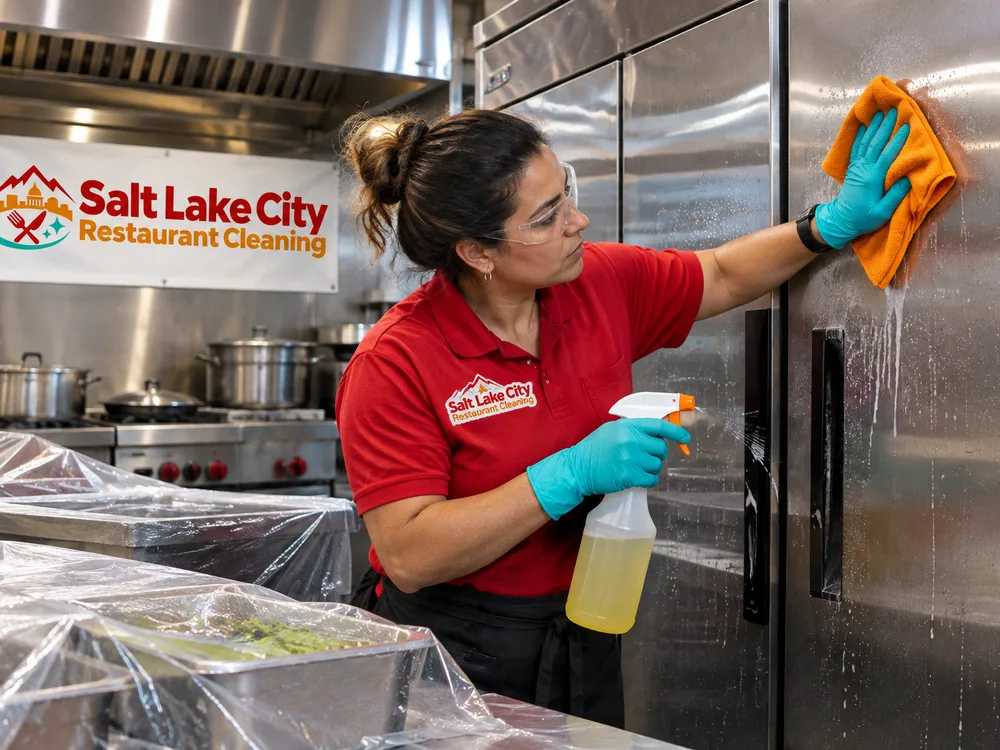
A commercial kitchen cleaning scope can include floors, baseboards, washable walls, equipment exteriors, stainless-steel surfaces, shelving exteriors, doors, handles, corners, ledges, and accessible areas beneath or behind movable equipment. Soil type matters. Loose dust may respond to HEPA-filtered vacuuming or microfiber removal, while greasy residue usually needs a compatible degreaser, dwell time, controlled agitation, and careful rinsing or wiping.
The method should fit the surface. Aggressive chemicals or abrasive pads can damage stainless steel, painted finishes, plastics, labels, and electrical components. Cleaners also need to keep overspray away from food, packaging, open utensils, controls, pilot assemblies, and energized equipment. Food and exposed food-contact items should be removed or fully protected before overhead or wet cleaning begins.
Exhaust-hood and duct cleaning is a separate, specialized scope. General kitchen cleaning may address accessible hood exteriors when agreed, but it should never be presented as a substitute for qualified cleaning of grease-removal devices, fans, ducts, and the full exhaust path.
Cooking residue settles on fronts, sides, legs, casters, splash areas, and accessible spaces around equipment. The scope should state whether equipment will remain in position or be moved by authorized restaurant staff.
Walls, Doors, and Washable Finishes
Grease and fingerprints build up around door pulls, pass-throughs, dish areas, and cooking lines. Product selection depends on the finish and the manufacturer's care guidance.
Floors, Edges, and Baseboards
Detailed floor work targets corners, edges, grout lines where present, and accessible areas under equipment. Drain service, repairs, and hazardous spill response require separate assessment.
Shelving and Storage Exteriors
Dust and residue can collect on shelf frames, tops, supports, and container exteriors. Food, disposable goods, and utensils must be moved or protected before cleaning.
Overhead Pipes and Ledges
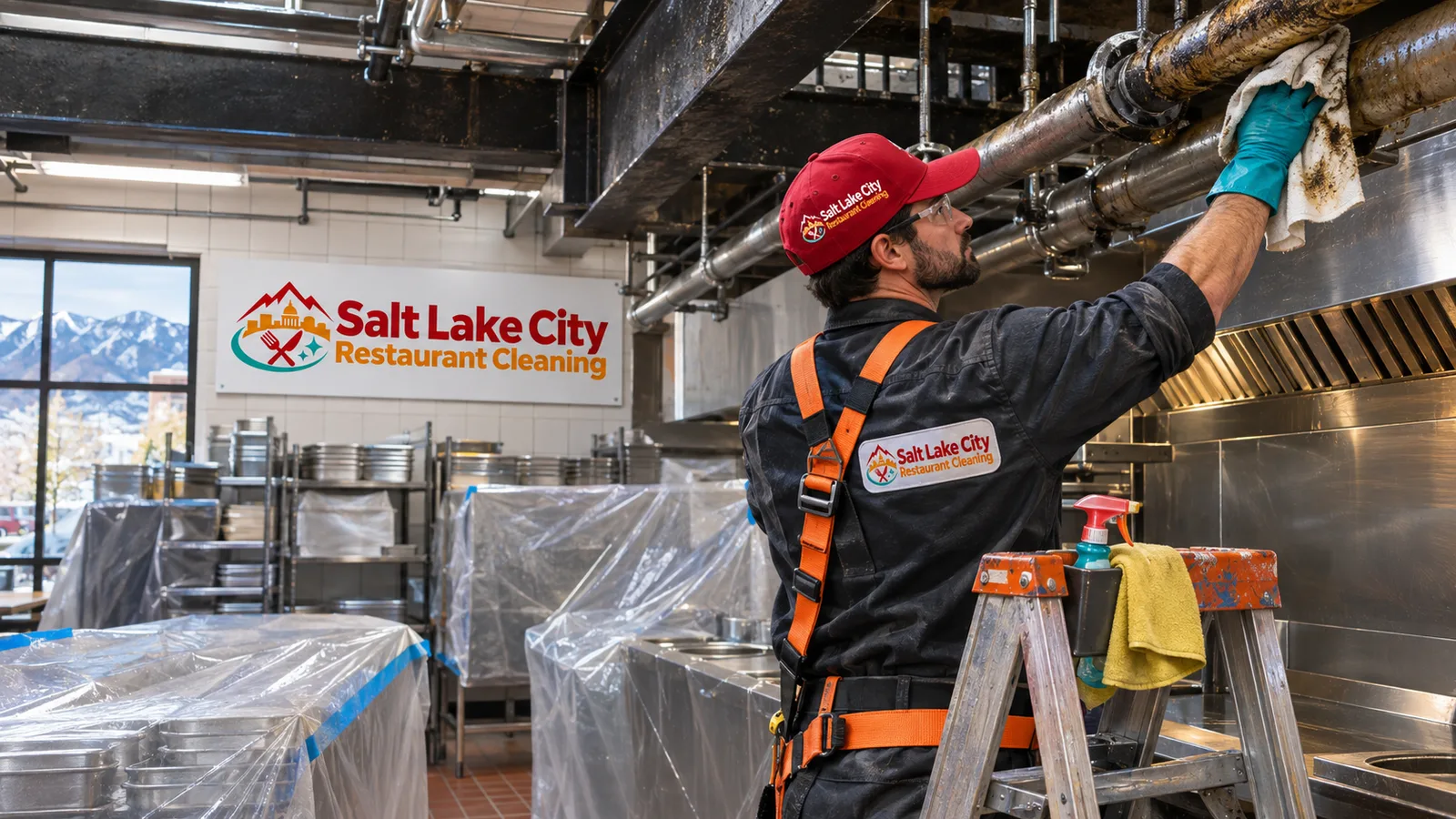
High horizontal surfaces can hold dust mixed with grease. Controlled removal prevents loose debris from being spread across the kitchen.
Fixtures and Accessible Ceiling Surfaces
Light exteriors, vents, beams, and washable ceiling surfaces may be included when they are safely accessible and compatible with the selected method.
Controlled overhead cleaning
Restaurant High Dusting in Murray
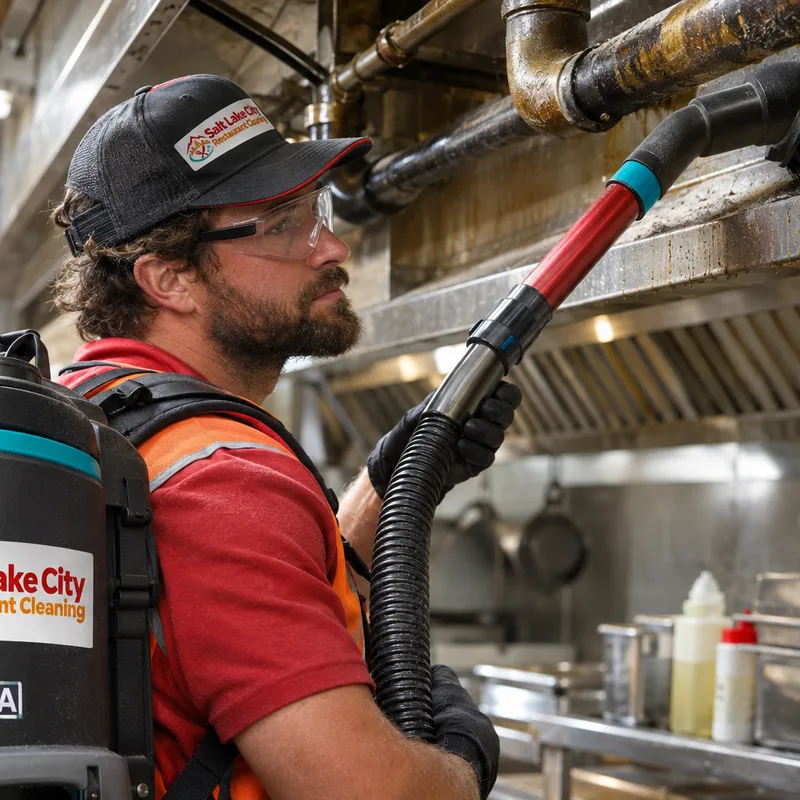
Restaurant High Dusting Murray service focuses on elevated, non-food-contact surfaces that are often outside the reach of daily crews. Common targets include exposed beams, pipes, conduit, duct exteriors, vent faces, light-fixture exteriors, ceiling edges, refrigeration tops, and high ledges. These areas can collect dry dust as well as sticky particulate created by cooking.
The safest method is usually controlled removal rather than simply pushing debris into the air. Depending on the surface and residue, the crew may use HEPA-filtered vacuum attachments, extension tools, microfiber materials, or damp wiping with a compatible cleaner. Access must be evaluated before work begins. Ladders need stable placement, and active prep zones should be cleared or protected against falling debris.
Murray lies in the Salt Lake Valley, where seasonal inversions and dry periods can contribute to airborne particulate. Restaurant ventilation and frequent door traffic can carry that material indoors, where it adheres readily to greasy overhead surfaces. Kitchens near major corridors such as State Street and Interstate Fifteen may also have frequent deliveries and extended operating hours, so high dusting is best scheduled during a closed or low-activity window.
The initial review identifies soil levels, high surfaces, fragile finishes, electrical concerns, equipment that cannot be moved, access limits, and the restaurant's available cleaning window.
Step02
Define the Written Scope
The scope lists included surfaces, exclusions, high-dusting needs, access expectations, and who is responsible for moving food, smallwares, or heavy equipment. It also separates general cleaning from specialized exhaust-system work.
Step03
Prepare and Protect
Food, utensils, packaging, and exposed food-contact surfaces are removed or covered. The work zone is marked off, and sensitive controls or equipment are protected according to the agreed plan.
Step04
Clean in a Controlled Order
Crews generally work from high areas toward lower surfaces so falling debris does not re-soil completed work. Dry soil is removed first, followed by degreasing and detailed wiping where appropriate.
Step05
Inspect Before Reopening
The manager and crew review the included areas, note any surfaces that could not be accessed, and confirm that protective coverings and cleaning materials have been removed before kitchen operations resume.
The cleaning window affects both scope and staffing. A small kitchen with clear access may be handled within one closed period, while a large line, heavy grease accumulation, or extensive high dusting can require staged visits. Overnight work may reduce disruption, but the restaurant still needs enough time for preparation, cleaning, inspection, drying, and reset before employees return.
A good plan begins with the menu and production pattern. Frying and high-volume cooking often create more airborne grease near the line. Bakeries and flour-heavy operations may have fine dry particulate in storage and production areas. Dishwashing zones can have mineral residue and moisture-related soil that require different products than cooking grease. The crew should never assume one chemical or one method is right for the whole kitchen.
Responsibility should be clear before the appointment. Restaurant staff may need to cool equipment, secure food, empty selected shelves, move smallwares, and provide access to utility or storage areas. Heavy cooking appliances should be disconnected or moved only by people authorized to do so. Clarifying these tasks prevents delays and protects equipment.
How Much Does Restaurant Kitchen Cleaning Cost in Murray?
$500–$2,500 for a scheduled deep clean
Restaurant kitchen cleaning in Murray typically ranges from $500 to $2,500 for a scheduled deep clean, while large kitchens, heavy grease, or extensive high dusting may cost more. A limited cleaning of selected surfaces may fall below that range.
What affects the final price
Final pricing depends on kitchen size, soil level, ceiling height, equipment density, access, required protection, staffing, and whether work must occur overnight.
Separate scopes stay clearly identified
Exhaust-duct cleaning, hazardous material cleanup, and equipment disconnection are separate scopes. The exact cost is confirmed after a walkthrough or detailed review of the work area.
A walkthrough can identify the highest-priority grease and dust areas, define what is included, and establish a cleaning window that fits your restaurant's operating schedule.
How long does restaurant kitchen cleaning in Murray take?
Many scheduled deep cleans fit within one closed operating window, but the actual duration depends on kitchen size, grease levels, access, and high-dusting needs. A compact kitchen with cleared surfaces takes less time than a full production line with tightly spaced equipment and exposed overhead utilities. The expected work time should be established after the kitchen is reviewed.
Can you clean while the restaurant is open?
Detailed kitchen cleaning is usually safer and more effective when food production has stopped and the work area is closed to regular traffic. Wet floors, ladders, cleaning chemicals, and the possibility of falling overhead dust make active prep periods a poor fit. Murray restaurants with long operating hours can discuss overnight, early-morning, or staged scheduling.
Does Restaurant High Dusting Murray include ceilings and vents?
High dusting can include accessible ceiling surfaces, vent faces, light exteriors, beams, pipes, and ledges when the materials and access conditions allow safe cleaning. Internal HVAC components and exhaust ducts are different scopes. A walkthrough determines which overhead surfaces can be reached and which cleaning method is appropriate.
Will food and kitchen equipment need to be moved?
Food, exposed utensils, packaging, and smallwares generally need to be removed or securely covered before deep cleaning or overhead dust removal. Equipment movement depends on weight, utility connections, and manufacturer requirements. Restaurant staff or an authorized technician may need to move or disconnect heavy appliances before the crew arrives.
Is kitchen deep cleaning the same as hood and exhaust cleaning?
No. Kitchen deep cleaning covers agreed room surfaces and equipment exteriors, while exhaust cleaning addresses grease-removal devices, hood interiors, ducts, fans, and the exhaust path. Accessible hood exteriors may be included in a general scope, but that work does not replace specialized exhaust-system service or required inspections.
How often should a Murray restaurant schedule deep cleaning and high dusting?
The right interval depends on cooking volume, menu, ventilation, operating hours, and how quickly grease and dust return. A fryer-heavy line may need attention more often than a low-volume preparation kitchen. Managers should use regular visual inspections and their sanitation plan to set the schedule rather than relying on one interval for every facility.
What should I provide to receive an accurate scope?
Provide the approximate kitchen size, operating hours, desired cleaning window, photos of the line and overhead areas, known access restrictions, and the surfaces causing concern. Mention ceiling height, fixed equipment, sensitive controls, and whether high dusting is required. A Murray walkthrough can then confirm conditions and establish responsibilities before work begins.
OPEN
Define the work
Plan Your Murray Kitchen Cleaning
Tell Salt Lake City Restaurant Cleaning about the kitchen layout, grease buildup, overhead surfaces, and available work window. You will receive a clearer scope for the areas that need attention before cleaning begins.