Commercial Kitchen Cleaning Services should address the grease, carbon deposits, food residue, and buildup that routine closing duties cannot fully remove. Salt Lake City Restaurant Cleaning develops a written scope around the equipment, surfaces, access limits, and condition of each facility. Work may be arranged as a one-time deep cleaning, recurring maintenance, or targeted service for problem areas.
As restaurant specialists serving Salt Lake City, UT, we plan the work around prep, service, deliveries, and reopening requirements. That matters in Downtown Salt Lake City, where kitchens may have constrained loading access and limited staging space. In Sugar House, neighborhood restaurants often need work coordinated around steady evening and weekend traffic. Commercial kitchens near the University of Utah may also require careful scheduling around institutional access and high-volume meal periods.
Before cleaning starts, the crew confirms which equipment can be moved, which utilities must be isolated, and which surfaces require product-specific care. The goal is a practical plan that protects sensitive components while giving heavily used areas the time and attention they need.
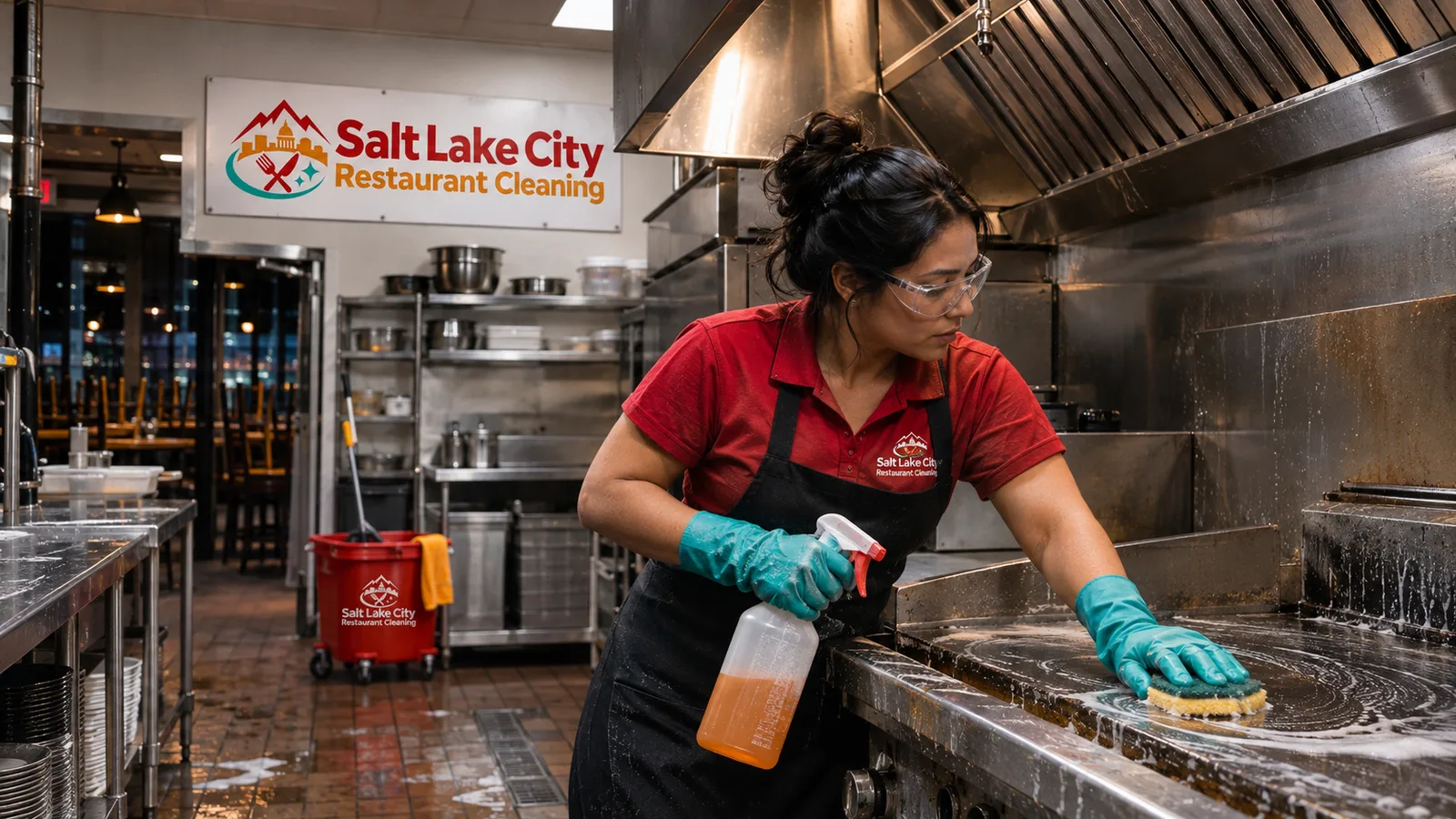
Exterior and accessible interior surfaces on ranges, ovens, fryers, griddles, broilers, salamanders, and other cooking-line equipment are cleaned according to the agreed scope. Heavy carbon deposits may require scraping, dwell time, and repeated treatment.
Kitchen Equipment Cleaning
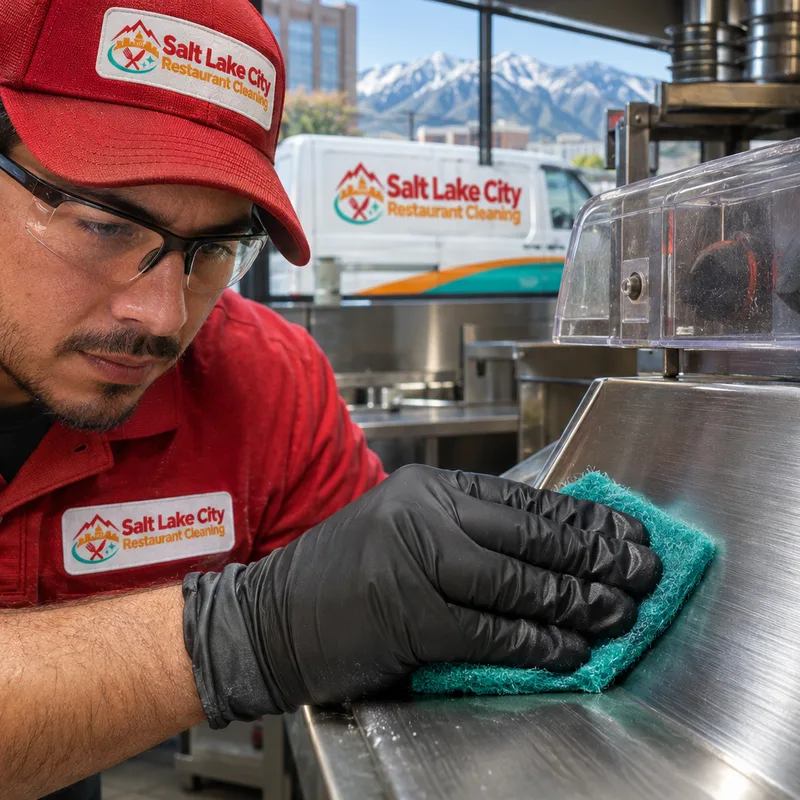
Stainless steel worktables, shelving, mixers, slicers, refrigeration exteriors, prep equipment, and movable fixtures can be detailed with methods suited to each surface. Electrical controls, motors, seals, and food-contact components receive appropriate precautions.
Floors, Walls, and Hard-to-Reach Areas
Grease accumulates beneath equipment, along floor edges, behind cooking lines, and on washable wall surfaces. Cleaning may include degreasing, agitation, extraction, and careful rinsing where drainage and surface construction permit.
Hoods and Accessible Exterior Surfaces
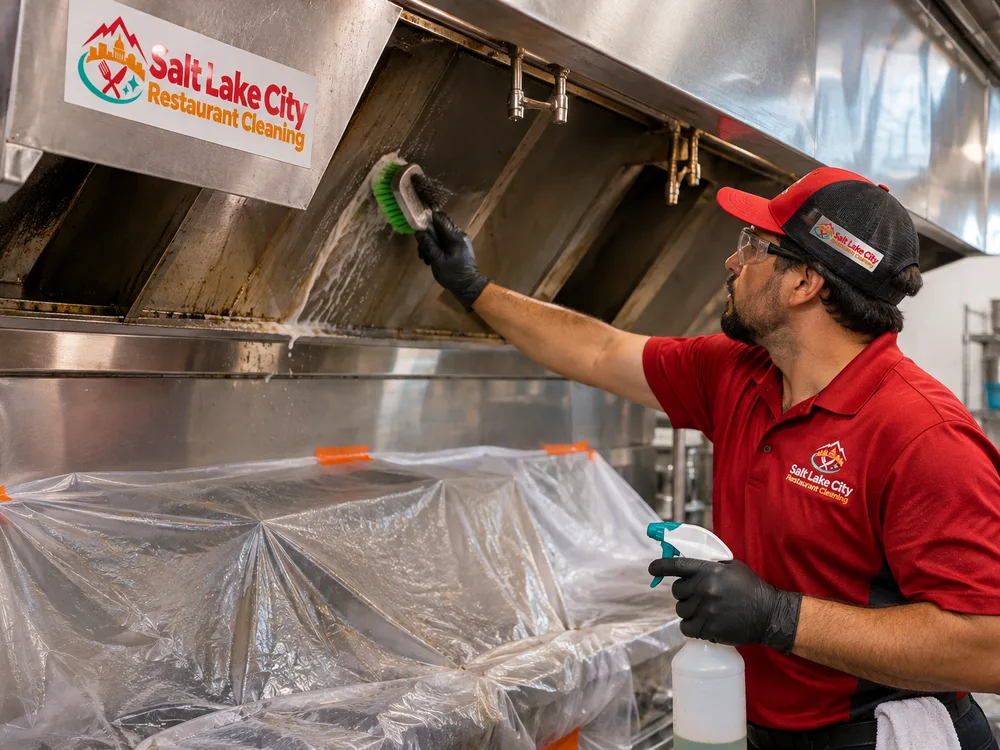
Restaurant hood cleaning may include exterior canopy surfaces, removable filters, and other accessible components defined in the scope. Exhaust-system work should be distinguished from general surface cleaning because ducts and fans require specialized access and procedures.
Prep and Storage Areas
Prep rooms, dish areas, dry-storage shelving, walk-in surfaces, and waste-handling zones can be included when access is cleared. Food, utensils, chemicals, and disposable goods must be protected or relocated before work begins.
Scheduled Deep Cleaning
Recurring commercial kitchen deep cleaning focuses on areas that fall outside daily sanitation routines. The schedule can rotate tasks so equipment surrounds, elevated surfaces, and difficult access points receive regular attention.
Surface-specific tools help protect stainless steel, labels, seals, and controls.
A useful cleaning proposal identifies the exact equipment and surfaces included, the expected condition at completion, access requirements, and any exclusions. This prevents confusion between routine janitorial work, food-contact sanitation, equipment detailing, and commercial exhaust-system cleaning.
The crew begins by documenting the work area and protecting nearby food, clean utensils, controls, and sensitive equipment. Dry debris is removed before degreasing. Suitable chemistry is then applied at the correct dilution and allowed the necessary dwell time. Agitation, scraping, wiping, controlled rinsing, or wet extraction follows according to the material and available drainage.
Stainless steel needs non-damaging tools and cleaning with the grain. Aluminum components can react with strongly alkaline products, while painted surfaces and equipment labels may require milder treatment. Electrical assemblies should not be saturated. These details are why professional kitchen cleaning starts with inspection rather than applying one chemical and one method throughout the room.
Cleaning and sanitizing are separate steps. Cleaning removes soil and grease. Sanitizing is performed afterward on applicable food-contact surfaces using a suitable product and according to its label directions. Restaurant staff should still follow their established food-safety procedures before resuming preparation.
The kitchen is reviewed by area and equipment item. Priorities, access limits, water and drainage considerations, shutdown needs, and the desired schedule are documented before pricing is finalized.
Step02
Pre-Service Preparation
The facility clears food, utensils, smallwares, and personal items from the work zone. The cleaning crew confirms utility isolation where required, places protective coverings, and stages tools without blocking necessary exits.
Step03
Degreasing and Detail Work
Loose soil is removed first. Crews then apply surface-appropriate products, allow dwell time, agitate buildup, and clean accessible components. Work proceeds methodically so residue is not transferred into completed areas.
Step04
Rinse, Recovery, and Drying
Residue and wastewater are controlled using the method suited to the room, such as wiping, wet vacuum recovery, or limited rinsing. Floors and surfaces are left to dry before equipment is returned to service.
Step05
Completion Review
The agreed work areas are checked against the written scope. Any inaccessible components, damaged surfaces, persistent staining, or maintenance concerns observed during cleaning are reported to the facility contact.
Local scheduling changes with the type of operation and its surroundings. Downtown restaurants may need loading, parking, and building access coordinated before an overnight crew arrives. Kitchens serving the Central Ninth district can have compact footprints where equipment must be cleaned in stages. Sugar House operators may prefer service after late closing hours, while facilities around the University of Utah may have controlled access and firm reopening times.
Seasonal Soil Control
Salt Lake City's winter weather also affects service planning. Snow, slush, and deicing material can be tracked through receiving doors and employee entrances, adding abrasive soil to kitchen and back-of-house floors. Entry routes may need separate attention so cleaned areas are not immediately re-soiled. During hot periods, grease and organic residue can produce odors more quickly in waste and loading areas, which makes dependable cleaning intervals useful.
Wastewater Planned Into the Scope
A kitchen cleaning company should account for wastewater control as well as visible results. Grease, solids, and chemical solutions should not be pushed into exterior storm drains. Interior discharge and disposal methods depend on the facility, the material collected, and local requirements. The scope should establish where recovery equipment can be emptied and who is responsible for grease traps, interceptor service, or hazardous material that falls outside ordinary cleaning.
Hood Cleaning and General Kitchen Cleaning Are Different
A clear proposal distinguishes visible hood cleaning from full exhaust-system service.
General restaurant kitchen cleaning commonly covers hood exteriors, accessible canopy surfaces, removable filters, backsplash areas, and the cooking line beneath the hood. Complete kitchen exhaust cleaning is a distinct task involving the hood plenum, ductwork, access panels, and exhaust fan.
When searching for restaurant hood cleaning in Salt Lake City, ask whether the proposed work covers the full exhaust path or only visible hood surfaces. A complete exhaust-system scope should clearly identify the fan and duct access, protection of the cooking line, grease removal methods, and post-service documentation. Cleaning frequency is determined by the cooking volume, fuel type, and the amount of grease-laden vapor produced, not by a single schedule that suits every operation.
Salt Lake City Restaurant Cleaning can define the kitchen surfaces and accessible hood components included in its proposal. If specialized exhaust work is needed, that requirement should be identified separately so the facility knows exactly what will and will not be cleaned.
How Much Does Commercial Kitchen Cleaning Cost in Salt Lake City?
Commercial kitchen deep cleaning in Salt Lake City typically costs about $500 to $1,500 for a smaller kitchen, while large, heavily soiled, or multi-area projects may run $1,500 to $5,000 or more. These are general planning ranges, not fixed quotes.
Price depends on kitchen size, grease and carbon buildup, equipment quantity, access behind cooking lines, utility shutdowns, wastewater recovery, crew timing, and whether hood or exhaust components are included. The exact cost is confirmed after a site walk or detailed scope review.
A small, prepared kitchen may take one shift, while a large facility or heavy restoration clean may require staged work across multiple shifts. Equipment quantity, carbon buildup, access, drying time, and whether the kitchen must reopen early all affect duration. Downtown Salt Lake City loading and building-access windows should be confirmed before the crew is scheduled.
Can cleaning be scheduled after the restaurant closes?
Yes, commercial kitchen cleaning is commonly scheduled after closing or during a planned shutdown. The crew needs enough time for setup, dwell time, detail work, residue recovery, drying, and a final review. Late service periods in Sugar House or restricted access near institutional facilities should be discussed during scheduling.
Does restaurant kitchen cleaning include moving equipment?
Movable equipment can be repositioned when the scope allows and the unit can be handled safely. Gas-connected, hardwired, plumbed, excessively heavy, or permanently installed equipment may require qualified trade support before it is moved. The site walk identifies these limitations so areas behind the line are priced accurately.
Is kitchen equipment ready to use immediately after cleaning?
Equipment should return to use only after surfaces are dry, protective materials are removed, utilities are safely restored, and restaurant staff complete any required food-contact sanitation checks. Powered or gas-fired equipment may need inspection and startup by authorized personnel if it was disconnected for access.
How often should a commercial kitchen receive deep cleaning?
The interval should be based on cooking volume, menu, grease production, operating hours, and the effectiveness of daily cleaning. Frying and solid-fuel cooking usually create different buildup than light preparation. Many facilities use a rotating schedule for cooking lines, floors, walls, elevated surfaces, and storage areas rather than waiting for every area to need service at once.
Does commercial kitchen cleaning include full exhaust duct and fan cleaning?
Full exhaust duct and fan cleaning is included only when those components are specifically listed in the proposal. Cleaning visible canopy surfaces or filters does not mean the plenum, ducts, access panels, and rooftop fan were serviced. Salt Lake City operators should ask for a component-by-component description when comparing hood cleaning proposals.
What should the restaurant do before the cleaners arrive?
Remove or protect food, utensils, small appliances, paper goods, and clean containers from the work zone. Provide approved access, identify utility shutoffs, clear loading routes, and tell the crew about damaged flooring, sensitive equipment, alarms, or drainage restrictions. Good preparation gives the crew more time for actual cleaning.
OPEN
Define the work
Plan a Cleaner, More Manageable Kitchen
Describe your kitchen, equipment, problem areas, operating schedule, and access needs. Salt Lake City Restaurant Cleaning will help define a practical scope and timing plan before work begins.